When a small business registers in Taipei, there’s often an unspoken assumption that an office comes next. A lease, some desks, a sign by the door. It feels like the point where a side project becomes a company. For a lot of micro businesses, though, that office ends up quiet most of the week. The founder is out with clients, working from home, or travelling to Hsinchu for a project.
Before signing for space, it’s worth asking how much workspace the business actually uses. Many small operators searching for a Shared Studio find the honest answer is smaller than they expected: an address, a room to meet in now and then, and a desk on the days the work demands it.
The Office as a Habit
Offices carry a lot of symbolic weight. They signal permanence to clients, structure to employees and seriousness to the founder. Those are real benefits. They’re just not always worth a full-time rent.
What’s changed is that the pieces of an office can now be rented separately. The address, the meeting room and the desk used to come bundled in one lease. Today each can be picked up on its own, and a small business can take only the parts it actually uses.
Three Small Businesses, Three Setups
How that layering works depends on the shape of the work:
- The independent consultant. Most of the work happens at clients’ offices or on video. A virtual office handles the address and mail, and a meeting room is booked for the occasional pitch or workshop. A daily desk would sit empty.
- The two-person design studio. The founders need to sit together a few days a week to review work, but rarely every day. Flexible desks plus a booked room for client presentations fit the rhythm better than a private office both would pay for full time. For a studio at this stage, a Shared Studio setup is about matching space to the days work really happens.
- The remote team lead. Employed by a company based elsewhere, they mostly work from home but need a professional setting for team calls and a change of scene. A flexible desk plan, possibly with access across centres depending on the plan, covers that without a lease.
Growing Into Space Rather Than Ahead of It
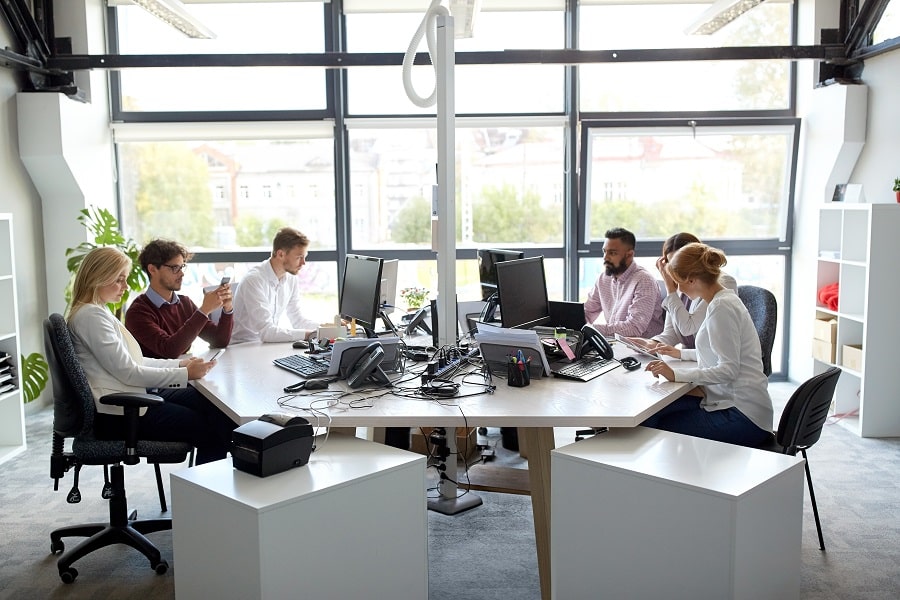
The risk with taking a full office early is paying for the business you hope to have instead of the one you run now. Empty desks are a quiet, monthly reminder of a forecast that hasn’t come true yet.
Building up in layers turns that around. An address first. Meeting rooms when clients appear. Flexible desks when the team starts needing to sit together. A private office, from NT$8,000 per person per month, once the headcount and routine are stable enough to fill it. Each step follows the work rather than running ahead of it.
That design studio did eventually take a private office, about eighteen months after registering. By then there were five of them, the meeting room bookings had become daily, and the decision almost made itself. The sign by the door went up later than they’d once imagined, and everyone who walked past it had a desk inside.
無需每日辦公空間的創業者
在台北註冊小型企業時,人們往往會想當然地認為接下來就該租辦公室了。租約、辦公桌、門牌。這似乎標誌著一個副業項目正式發展成為一家公司。然而,對於許多微型企業來說,辦公室一週的大部分時間都處於閒置狀態。創辦人可能在外拜訪客戶、在家辦公,或前往新竹出差。
在簽訂辦公空間租約之前,值得先詢問企業實際上需要多少辦公空間。許多小型企業主在尋找辦公室時,都會考慮這一點。共享工作室 最終發現,誠實的答案比他們預想的要簡單得多:一個地址、一個偶爾開會的房間,以及工作需要時使用的辦公桌。
辦公室作為一種習慣
辦公室承載著許多像徵意義。它向客戶傳遞穩定性,向員工傳遞組織架構,向創辦人傳遞認真負責的態度。這些都是實實在在的好處。但它們並不總是值得支付全職租金。
改變的是,辦公室的各個組成部分現在可以單獨租賃。過去,地址、會議室和辦公桌通常捆綁在一份租賃合約中。如今,每一項都可以單獨租賃,小型企業可以只租用實際使用的部分。
三家小型企業,三種辦公室模式
這種分層模式的運作方式取決於工作的形式:
- 獨立顧問。大部分工作在客戶辦公室或透過視訊完成。虛擬辦公室負責處理地址和郵件,會議室則用於偶爾的提案或研討會。日常使用的辦公桌通常空置。
- 雙人設計工作室。創辦人每週需要抽出幾天時間聚在一起討論工作,但很少每天都聚。靈活的辦公桌加上一個預留的房間用於客戶演示,比兩人都負擔得起的私人辦公室更符合他們的節奏。對於這個階段的工作室來說,共享工作室 「空間配置」的本質,是讓辦公空間與實際的工作需求相符。
- 遠距團隊負責人:他們受僱於外地的公司,平時多在家辦公,但有時需要一個專業的環境來進行團隊會議,或者只是換個工作氛圍。彈性工位方案(根據具體套餐,甚至可能支援在多個辦公中心使用)無需長期租賃,便能很好地滿足這些需求。
按需擴展空間,而非超前佈局
過早租下整間辦公室的風險在於:你可能是在為「你所期望擁有的業務規模」買單,而非「目前實際營運的業務規模」。那些空置的工位,就像是一個無聲的提醒,每個月都在提醒你:當初的業務預測尚未實現。
分階段擴展空間則能規避此問題。起步時先擁有一個辦公地址;當有客戶來訪時,預訂會議室;當團隊成員需要聚在一起辦公時,使用靈活工位;而當團隊人數和日常工作模式足夠穩定時,再租用獨立辦公室(每人每月費用約 8,000 新台幣起)。每一步擴展都緊跟著實際工作需求,而非盲目超前。
那家設計工作室在註冊成立約十八個月後,最後租了一間獨立辦公室。彼時,團隊已有五人,會議室預訂也變得頻繁(幾乎每天都有),租用獨立辦公室的決定便順理成章地產生了。門外的招牌掛起的時間比他們原先設想的要晚,但此時,每一位經過這扇門的人,在辦公室內都有屬於自己的工位。